Precision Injection Molding at Production Scale
Precision injection molding is where the drawing tolerance is the product. For engineering and sourcing teams, the question is whether a molder can hold a critical dimension on the millionth plastic component as well as the first article — and prove it with measurement and quality control, not assurance. That is the gap between a shop that can make a good part once and a partner who can make a million identical ones.
A precision molding program is a closed loop of tool steel quality, press stability, resin consistency, and verified measurement. When those elements are managed together, the part is in tolerance shipment after shipment. When any one drifts — steel wear, barrel variation, moisture in resin — the dimension walks and scrap climbs before anyone notices.
What the Capability Numbers Mean for Your Program
Specifications define the envelope in which precision is predictable. A 50-ton to 400-ton press range covers the small, high-cavity tools that dominate connectors and micro-features without oversizing the process. Tolerances of ±0.01 mm on critical features describe the envelope in which the dimension is controlled by the process, not by sorting.
Mold life rated at 500,000 to 1,000,000 shots is a maintenance and measurement plan, not a brochure claim. Tools are serviced by shot count and re-verified, so wear never surprises a tight-tolerance shipment. Tooling lead time of 20 to 40 days reflects the added discipline of stable steel and documented tryout, and an annual capacity above 50,000,000 parts signals a floor built for sustained precision volume.
How a Precision Program Runs
Every precision program at the Dongguan facility follows a disciplined, measured path, and each step has an owner and a record:
- Design for manufacturability (DFM). Wall thickness, draft, gating, and tolerance stack-up are reviewed so the critical dimension is achievable and stable.
- Stable tool fabrication. The mold is machined from selected steel with tight cavity tolerances and validated on a tryout press with CMM data.
- Resin conditioning. Resin is dried and conditioned to specification so moisture and lot variation do not move the dimension.
- Molding. Molten thermoplastic is injected, packed under controlled pressure, and cooled to a stable, repeatable shape.
- Measured ejection and handling. The part is removed by robot and routed to inspection with minimal handling variation.
- Verification. Critical dimensions are checked with CMM and optical gauges; results feed SPC charts and lot records.
The point of this structure is proven conformance. It is what lets your incoming inspection confirm rather than discover.
Choosing the Right Resin
Resin choice drives dimensional stability and warp more than any other decision in precision molding. The table below maps common thermoplastics to precision properties.
| Resin | Key properties | Typical precision applications |
|---|---|---|
| POM | Low warp, dimensional stability | Gears, bushings |
| LCP | Flow, stability, low warp | Connectors, thin walls |
| PEEK | High stability, heat resistance | Medical, aerospace-grade |
| PBT | Dimensional stability, insulation | Terminals, connectors |
| PC | Clarity, stability | Optical, lenses |
| PA6 / PA66 | Strength, wear resistance | Structural precision parts |
Selection is matched to function, environment, and regulatory requirements. For low-warp or tight-tolerance grades, the specific lot is qualified and documented from the first run.
Equipment and Plant Capacity
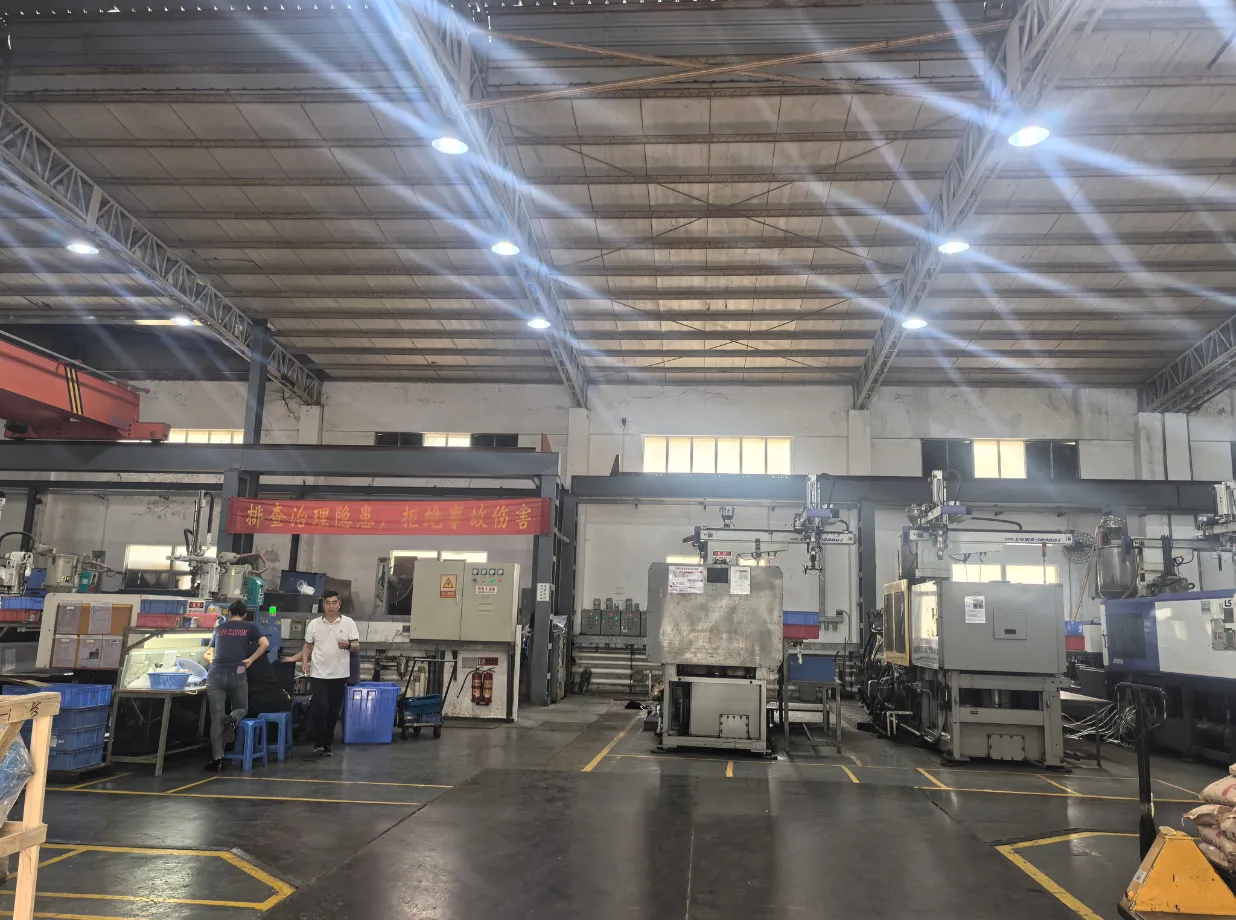
The Dongguan molding floor runs small high-cavity presses with closed-loop control, cavity-pressure monitoring, and CMM verification.
The plant runs computerized machines from 50T to 400T with closed-loop control and cavity-pressure monitoring. Dehumidifying dryers, central material handling, and conditioned resin keep process conditions stable across long precision runs. Robotic part removal and automated packaging reduce human variation, and in-mold sensing with SPC charting catches drift before it becomes scrap.
Applications and Where They Fail
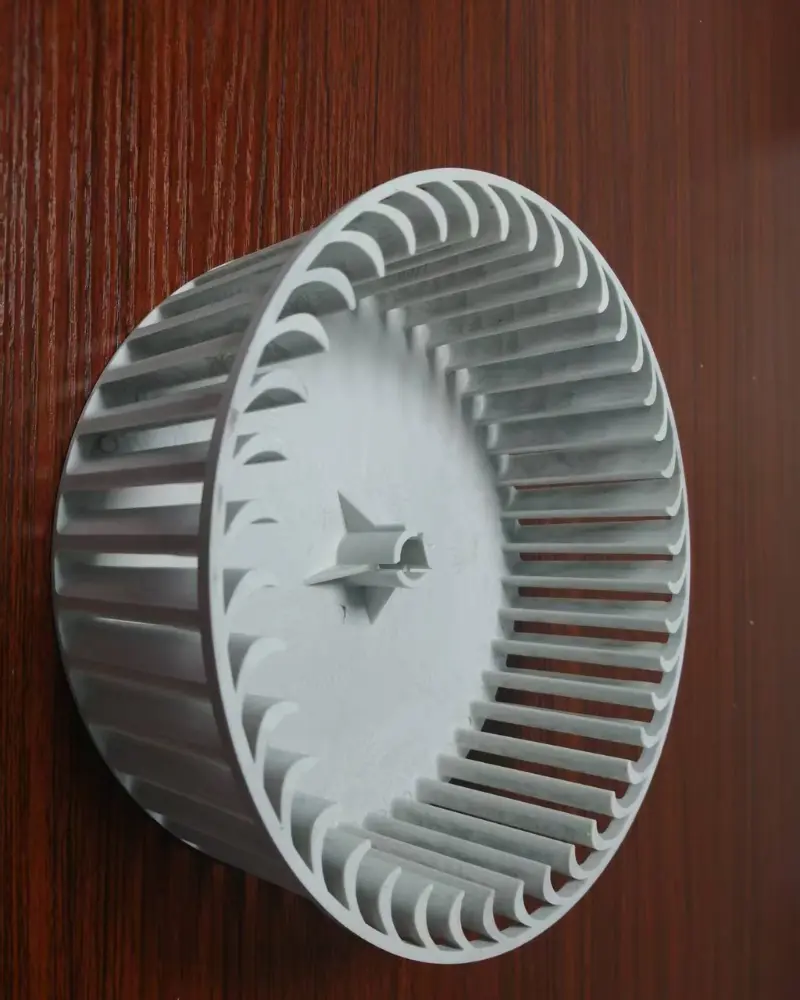
Precision components where dimensional repeatability determines field reliability.
Precision molding appears wherever a dimension is the function. Each application carries its own failure mode, and process controls are tuned to the requirement rather than applied generically:
- Connectors and terminals — dimensional precision and flatness are non-negotiable.
- Optical and lensed components — surface and form drive performance.
- Micro-feature gears and bushings — concentricity and finish drive wear life.
- Medical micro components — consistency protects function and patient safety.
- Precision housings — fit and sealing dominate.
For electronics and medical programs, precision components are produced from stable, qualified resins under controlled process discipline, where a single out-of-tolerance dimension can disable an assembly.
Quality and Compliance Expectations
Quality is engineered, not inspected in at the end. The facility operates under an ISO 9001 quality management system with documented controls at every step: incoming material verification, first-article inspection, in-process SPC, and final audit against the approved drawing. Dimensional verification uses CMM and optical gauges, with critical characteristics tracked lot by lot. For regulated industries, records and traceability are retained, and customer-specific protocols are supported where required.
Cost and Lead-Time Drivers
Buyers often fixate on piece price, but the total cost of a precision program is set earlier and elsewhere:
- Tool steel and cavitation — stable steel and more cavities raise tool cost but lower piece price at volume.
- Resin grade — low-warp and specialty grades cost more and mold differently.
- Tolerance and finish — mirror polish and ±0.01 mm add process and measurement cost.
- Secondary operations — inspection, marking, and assembly add handling but can lower landed cost versus multiple suppliers.
- Volume and cadence — steady runs amortize setup and stabilize pricing.
Lead time is dominated by validated tooling, not molding. A well-run DFM and a tool shop in the same building compress the critical path from design release to first article.
Common Defects and How They Are Prevented
Warp, sink, short shots, flash, and dimensional drift are symptoms of process ignorance, not bad luck. They are prevented by understanding how melt temperature, injection speed, packing pressure, and cooling time interact for each resin family — and by validating those settings on a tryout press before a production commit. Cavity-pressure monitoring and CMM verification confirm every shot is in tolerance, and SPC charts flag drift before it becomes scrap.
Related Capabilities
Precision molding is one option in a broader molding toolkit. Pair it with Medical Plastic Injection Molding for regulated micro components, Insert Molding for precision metal-plastic assemblies, or Consumer Electronics Injection Molding for tight-tolerance enclosures. For the full range of capabilities, see our Plastic Injection Molding service or the homepage for the complete overview.