Insert Molding at Production Scale
Insert molding removes a step from your bill of materials by building the assembly in the mold: a metal insert, threaded boss, contact, or bushing is placed and plastic is injected around it. For sourcing and engineering teams, the win is a single robust part instead of a molded component plus a separate press-fit, staking, or adhesive operation that can loosen or fail later.
A reliable insert molding program is a closed loop of insert specification, placement accuracy, resin behavior, and verification. When those elements are managed together, the insert stays located and the bond holds for the life of the part. When placement or preheat is treated casually, inserts shift, sink, or crack the surrounding plastic.
What the Capability Numbers Mean for Your Program
Specifications define the envelope in which insert molding is predictable. A 50-ton to 800-ton press range covers small precision inserts through larger encapsulated assemblies without splitting the program across vendors. Tolerances of ±0.02 mm on critical features describe where insert position and plastic dimensions are controlled rather than left to chance.
Mold life rated at 300,000 to 1,000,000 shots is a maintenance plan, not a sales figure. Insert molds are serviced by shot count so wear on locating features never surprises a shipment. Tooling lead time of 20 to 40 days reflects the added complexity of insert handling and validation, and an annual capacity above 40,000,000 parts signals a floor built for sustained volume.
How an Insert Molding Program Runs
Every insert molding program at the Dongguan facility follows a disciplined path, and each step has an owner and a record:
- Design for manufacturability (DFM). Insert type, location, draft, and gate position are reviewed so plastic flows and bonds around the insert without trapping or shifting it.
- Insert specification. The metal or component is specified for plating, preheat, and tolerance so it survives molding and bonds correctly.
- Tool fabrication. The mold is machined with precise insert-locating features and, where needed, automated placement.
- Molding. Inserts are placed and preheated as required, then plastic is injected, packed, and cooled to lock the assembly.
- Ejection and handling. The encapsulated part is removed by robot and routed to inspection, minimizing handling damage to the insert.
- Verification. Insert position, torque retention, and critical dimensions are checked with gauges and sampling; results are recorded.
The point of this structure is assembly reliability. It is what lets your incoming inspection confirm rather than discover a loose insert.
Choosing the Right Resin
Resin choice around an insert drives bond, stress, and cost more than any other decision. The table below maps common thermoplastics to insert-molding properties.
| Resin | Key properties | Typical insert applications |
|---|---|---|
| PA6 / PA66 | Strength, wear resistance | Bushings, threaded bosses |
| PPS | Chemical and heat resistance | Electrical, under-hood |
| PBT | Dimensional stability, insulation | Contacts, terminals |
| PC | Impact, clarity | Sensor housings |
| POM | Low friction, stability | Bearings, sleeves |
| Glass-filled PA | Rigidity | Structural inserts |
Selection is matched to function, environment, and regulatory needs. For heat-stabilized or flame-retardant applications, the grade is qualified and documented from the first lot.
Equipment and Plant Capacity
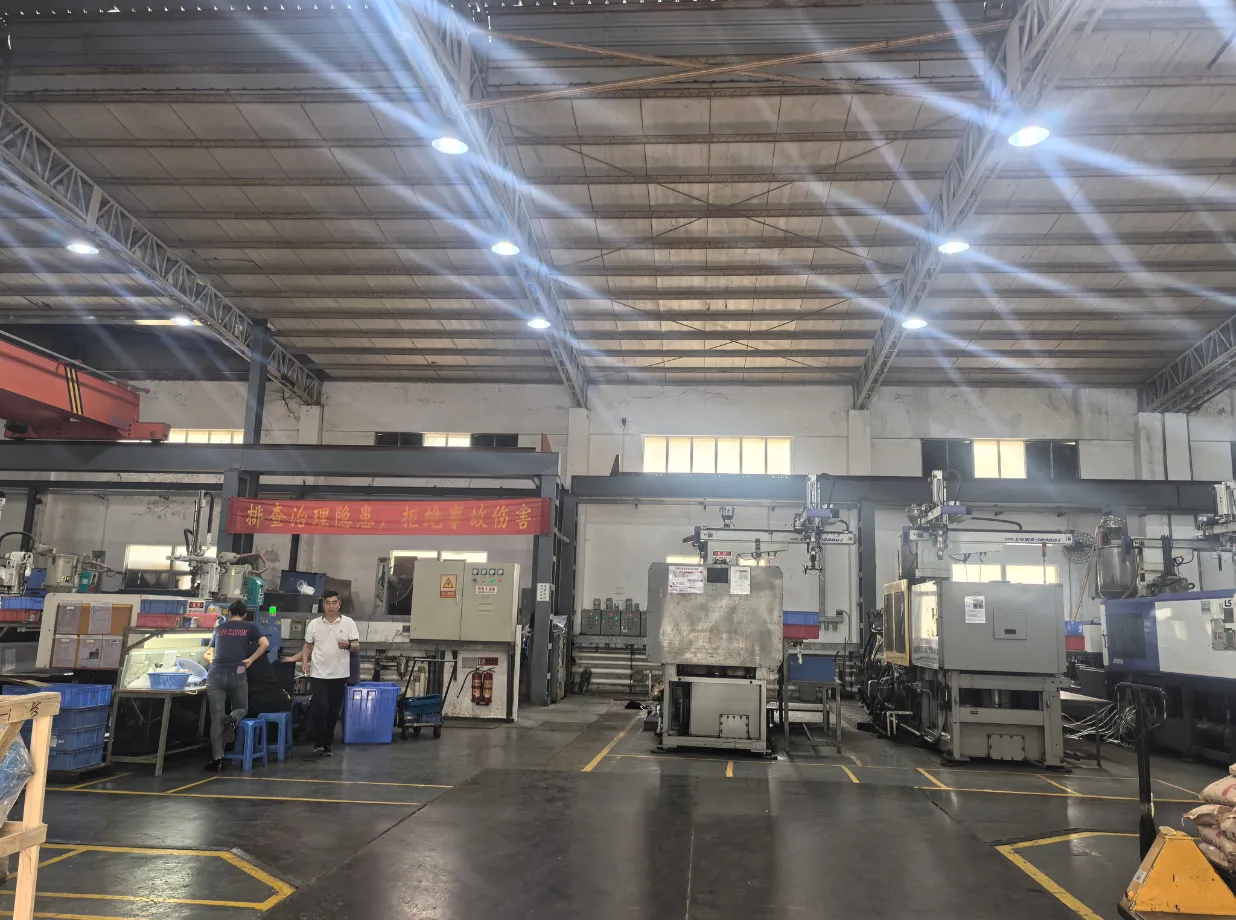
The Dongguan molding floor runs presses with insert-handling and preheat capability for consistent encapsulated assemblies.
The plant runs computerized machines from 50T to 800T with closed-loop control and cavity-pressure monitoring. Hot-runner controllers, dehumidifying dryers, and central material handling keep resin conditions stable across long runs. Automated insert placement and robotic part removal reduce variation, and in-mold sensing with SPC charting catches drift before it becomes scrap.
Applications and Where They Fail
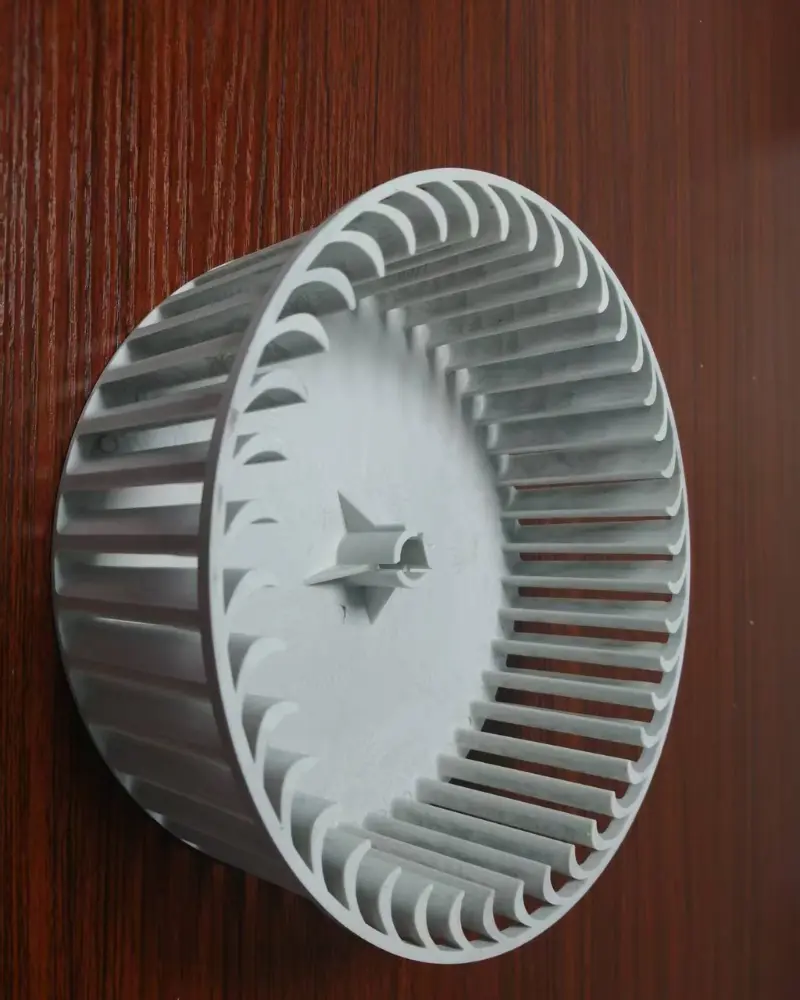
Insert molded components where insert position and retention determine field reliability.
Insert molding appears wherever a plastic part needs a functional metal feature. Each application carries its own failure mode, and process controls are tuned to the requirement rather than applied generically:
- Threaded inserts and bosses — torque retention and position dominate.
- Electrical contacts and terminals — insulation and dimensional precision are non-negotiable.
- Bushings and bearings — concentricity and low friction drive wear life.
- Sensors and ferrite cores — position and encapsulation prevent movement.
- Sealed metal-plastic assemblies — bonding prevents corrosion and loosening.
For automotive and electronics programs, insert molded components are produced under controlled process discipline, where a single shifted insert can disable a connector or fitting.
Quality and Compliance Expectations
Quality is engineered, not inspected in at the end. The facility operates under an ISO 9001 quality management system with documented controls at every step: incoming insert verification, first-article inspection, in-process SPC, and final audit against the approved drawing. Dimensional verification uses CMM and calibrated gauges, with critical characteristics tracked lot by lot. Insert torque and position are sampled and recorded, and customer-specific protocols are supported where required.
Cost and Lead-Time Drivers
Buyers often fixate on piece price, but the total cost of an insert molding program is set earlier and elsewhere:
- Tool complexity and cavitation — insert-handling molds cost more; the right balance depends on volume.
- Insert cost and plating — plated or precision inserts add material cost.
- Tolerance and finish — tighter specs and critical surfaces add process cost.
- Secondary operations — torque testing, welding, and assembly add handling but can lower landed cost versus multiple suppliers.
- Volume and cadence — steady runs amortize setup and stabilize pricing.
Lead time is dominated by validated tooling, not molding. A well-run DFM and a tool shop in the same building compress the critical path from design release to first article.
Common Defects and How They Are Prevented
Insert shift, sink around the insert, cracking, and short shots are symptoms of poor placement or weak process control, not bad luck. They are prevented by precise locating features, correct preheat, and validating flow and packing on a tryout press before a production commit. Cavity-pressure monitoring confirms every shot fills completely, and SPC charts flag drift before it becomes scrap.
Related Capabilities
Insert molding is one option in a broader molding toolkit. Pair it with Overmolding for soft-touch multi-material parts, Two-shot Injection Molding for molded-in-color assemblies, or Automotive Injection Molding for high-volume automotive programs, and Plastic Injection Molding Services for the complete program. See the homepage for the full capability overview.