Automotive Injection Molding at Production Scale
Automotive programs are unforgiving because a single non-conforming plastic part can trigger a line-down event at an assembly plant or a field campaign costing millions. For sourcing and engineering teams, the real question is not whether a molder can make the part once, but whether it can hold the part stable across every shipment for the life of the program. That consistency is the difference between a catalog supplier and a qualified automotive manufacturing partner.
A mature automotive molding program is a closed loop of tool design, resin qualification, press control, and verification, with documentation backing every step. When those elements are managed together and recorded, incoming inspection confirms rather than discovers. When they are fragmented across vendors and borders, variation appears as scrap, warranty claims, and recall exposure.
What the Capability Numbers Mean for Your Program
Specifications on a supplier’s website are commitments about what can actually be delivered, not decoration. A 50-ton to 800-ton press range means a single facility can run everything from small precision connectors to large interior and under-hood housings without splitting your program across vendors. Tolerances of ±0.02 mm on critical features describe the envelope in which the process is predictable rather than heroic.
Mold life rated at 300,000 to 1,000,000 shots is a maintenance plan, not a sales figure. Tools are serviced by shot count so wear is scheduled and never surprises a shipment. Tooling lead time of 15 to 35 days reflects how quickly steel can be cut and validated when engineering and molding share a building, and an annual capacity above 50,000,000 parts signals a floor built for sustained automotive volume.
How an Automotive Program Runs
Every automotive program at the Dongguan facility follows a disciplined, documented path, and each step has an owner and a record:
- Design for manufacturability (DFM). Wall thickness, draft, gating, ejection, and tolerance stack-up are reviewed against automotive requirements before steel is cut.
- Tool fabrication. The mold is machined from selected steel, fitted with the chosen runner system, and validated on a tryout press with documented results.
- Resin qualification. Resin is dried, color-matched, and verified to the specified grade and lot, then fed through a controlled system.
- Molding. Molten thermoplastic is injected, packed under controlled pressure, and cooled to a stable shape under closed-loop control.
- Ejection and handling. The part is removed by robot and routed to inspection or downstream operations, minimizing manual variation.
- Verification and PPAP. Critical dimensions are checked with CMM and in-process gauges; results feed the PPAP package and lot records.
The point of this structure is traceability. It is what lets your plant confirm a shipment matches the approved sample, and what lets a recall investigation find the root cause in hours rather than weeks.
Choosing the Right Resin
Material choice drives cost, performance, and regulatory exposure more than any other decision in an automotive program. The table below maps common engineering thermoplastics to the properties that matter in automotive sourcing.
| Resin | Key properties | Typical automotive applications |
|---|---|---|
| PA66 (Nylon) | Strength, heat and wear resistance | Connectors, clips, under-hood parts |
| PPS | Chemical and heat resistance | Fuel-system, sensor housings |
| PBT | Dimensional stability, electrical insulation | Connectors, terminals |
| PC/ABS | Impact and heat resistance | Interior and electronic housings |
| TPU | Soft-touch, sealing | Gaskets, boots, seals |
| Glass-filled PA | Rigidity, creep resistance | Structural and load-bearing parts |
Selection is matched to function, environment, and regulatory requirements. For flame-retardant, glass-filled, or heat-stabilized applications, the specific grade is qualified and the documentation your compliance team needs is maintained from the first lot.
Equipment and Plant Capacity
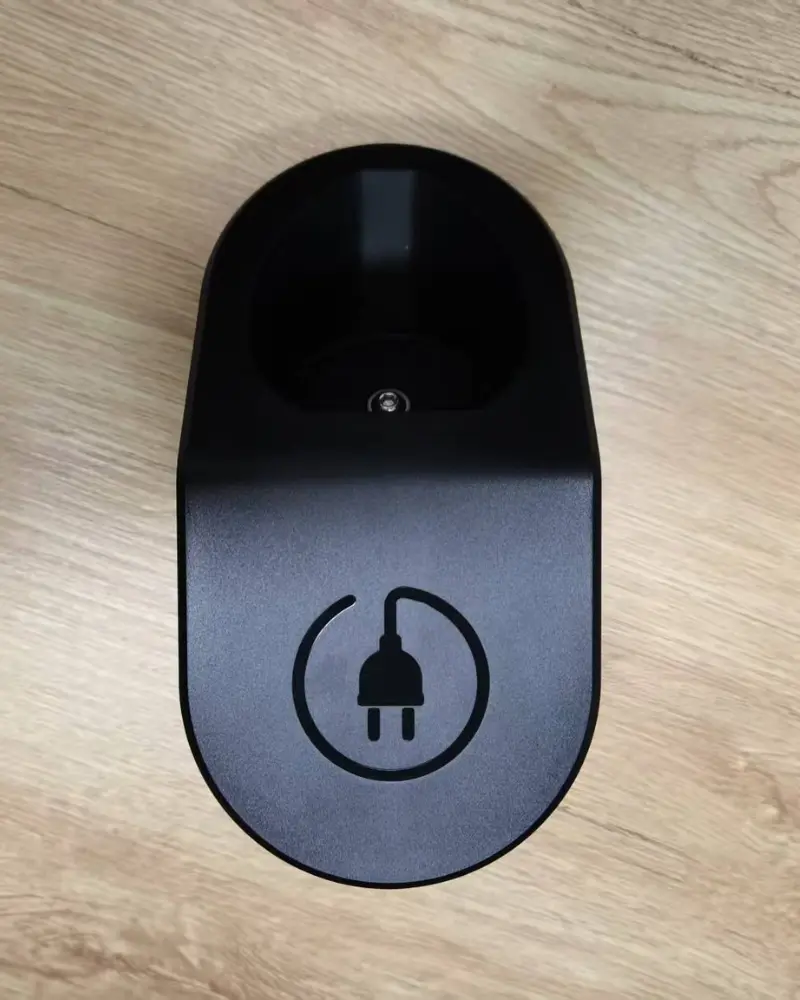
The Dongguan molding floor runs computerized 50T–800T presses with closed-loop process control and cavity-pressure monitoring.
The plant runs a fleet of computerized machines from 50T to 800T, all with closed-loop control and cavity-pressure monitoring. Hot-runner controllers, dehumidifying dryers, and central material handling keep resin conditions stable across long automotive runs. Robotic part removal and automated packaging reduce human variation, and in-mold sensing with SPC charting catches drift before it becomes scrap.
Applications and Where They Fail
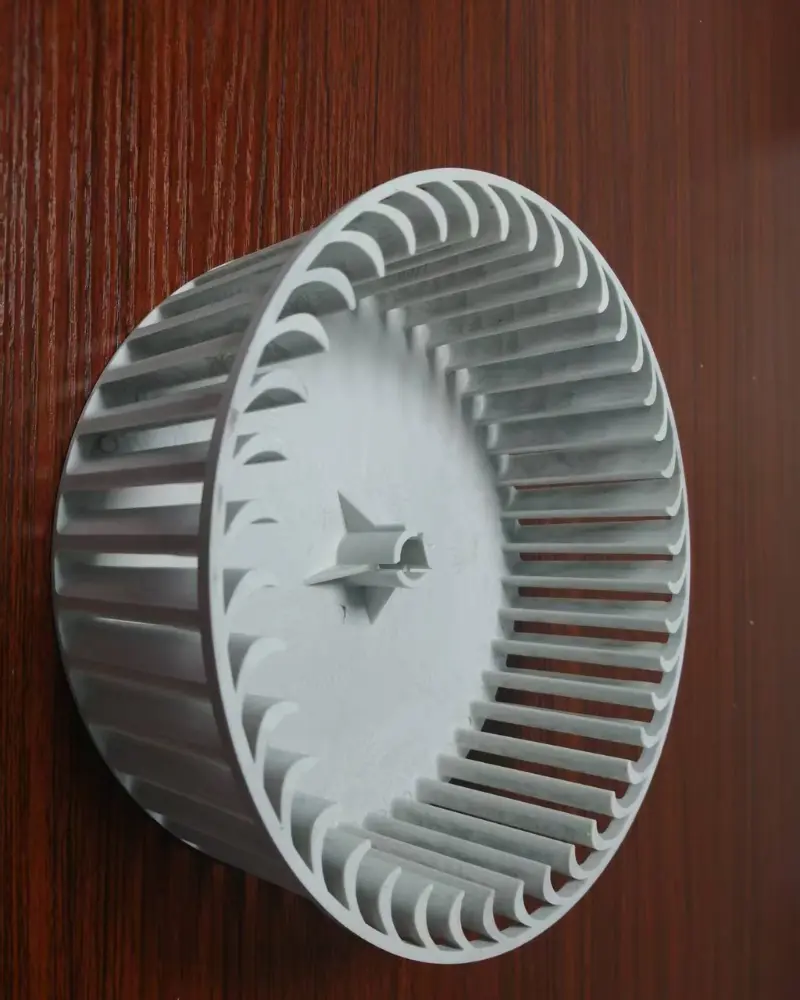
Automotive plastic components where dimensional precision and insulation determine field reliability.
Precision molding appears wherever an automotive part must be light, consistent, and produced in volume. Each application carries its own failure mode, and process controls are tuned to the requirement rather than applied generically:
- Connectors and terminals — dimensional precision and insulation are non-negotiable; a misfit connector can disable a harness.
- Sensor and control housings — flatness and fit dominate sealing and EMI performance.
- Fuel-system and fluid components — chemical resistance and sealing prevent leaks.
- EV battery and charging hardware — flame-retardance and consistency protect an entire pack.
- Interior and trim components — appearance, feel, and cost must balance.
For EV and energy storage programs, battery module and charging hardware components are produced using flame-retardant engineering resins under controlled process discipline, where a single non-conforming part can affect an entire pack.
Quality and Compliance Expectations
Quality is engineered, not inspected in at the end. The facility operates under an ISO 9001 quality management system with documented controls at every step: incoming material verification, first-article inspection, in-process SPC, and final audit against the approved drawing. Dimensional verification uses CMM and calibrated gauges, with critical characteristics tracked lot by lot. For automotive programs, the records and traceability needed for audits and field recalls are retained, and customer-specific protocols including PPAP documentation packages are supported where required.
Cost and Lead-Time Drivers
Buyers often fixate on piece price, but the total cost of an automotive molding program is set earlier and elsewhere:
- Tool steel and cavitation — more cavities lower piece price but raise tool cost; the right balance depends on volume.
- Resin grade — glass-filled and flame-retardant grades cost more and mold differently.
- Tolerance and finish — tighter specs and high-gloss interior finishes add process and polishing cost.
- Secondary operations — printing, welding, and assembly add handling but can lower your landed cost versus multiple suppliers.
- Volume and cadence — steady automotive runs amortize setup and stabilize pricing.
Lead time is dominated by tooling, not molding. A well-run DFM and a tool shop in the same building compress the critical path from design release to first article.
Common Defects and How They Are Prevented
Warpage, sink marks, short shots, and flash are symptoms of process ignorance, not bad luck. They are prevented by understanding how melt temperature, injection speed, packing pressure, and cooling time interact for each resin family — and by validating those settings on a tryout press before a production commit. Cavity-pressure monitoring confirms every shot fills completely, and SPC charts flag drift before it becomes scrap.